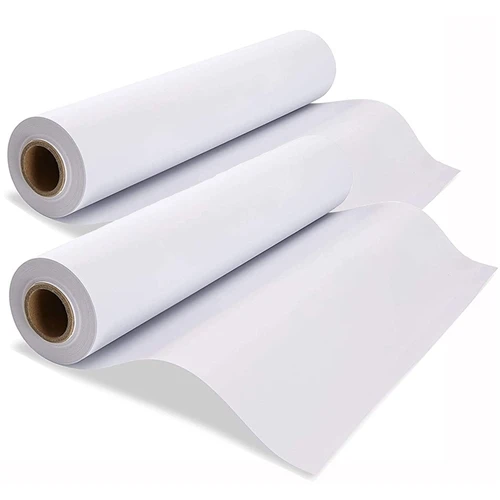
Hey there! As a supplier of 18gsm Pure Pulp Protection Paper, I often get asked about the rebound resilience of our product. So, I thought I'd take a moment to break it down for you.
First off, let's talk about what rebound resilience actually means. In simple terms, it's the ability of a material to bounce back to its original shape after being deformed. For protection paper, this is super important because it directly affects how well the paper can absorb shocks and protect the items it's wrapping.
When it comes to our 18gsm Pure Pulp Protection Paper, the rebound resilience is quite impressive. The pure pulp used in its production gives it a unique structure that allows it to quickly recover from compression. This means that when the paper is squeezed or pressed, it can spring back into place, maintaining its protective qualities.
One of the key factors contributing to the good rebound resilience of our paper is the quality of the pulp. We source high - grade pure pulp, which has long fibers. These long fibers are intertwined in a way that creates a flexible and elastic network. When the paper is deformed, the fibers can shift and bend, but they also have the tendency to return to their original position once the pressure is removed.
Another aspect is the manufacturing process. We've fine - tuned our production methods to ensure that the paper has the right balance of strength and flexibility. The paper is treated in a way that enhances its natural properties, making it more resilient. During the papermaking process, we control factors like temperature, moisture, and pressure to create a consistent and high - performance product.
Now, let's compare our 18gsm Pure Pulp Protection Paper with some other types of protection paper. Take the 30gsm Kraft Protection Paper for example. Kraft paper is known for its strength, but it might not have the same level of rebound resilience as our 18gsm pure pulp paper. Kraft paper is often made from wood pulp that has been chemically treated to increase its strength, but this can sometimes make it a bit stiffer. So, when it's compressed, it may not bounce back as quickly as our pure pulp paper.
The 30gsm Recycled Pulp Protection Paper also has its own characteristics. Recycled pulp contains a mix of fibers from different sources, and the fibers are usually shorter and more damaged compared to pure pulp. This can result in a lower rebound resilience. The recycled paper might be more suitable for applications where cost is a major factor, but if you need excellent shock - absorbing and rebound properties, our 18gsm Pure Pulp Protection Paper is a better choice.
The good rebound resilience of our 18gsm Pure Pulp Protection Paper has many practical benefits. For one, it provides better protection for fragile items. When you're wrapping something delicate like glassware or electronics, the paper can absorb the impact of bumps and drops, and then quickly return to its normal state to continue protecting the item.


It also means that the paper can be reused more effectively. Since it can bounce back, it retains its shape and protective capabilities over multiple uses. This is not only cost - effective but also more environmentally friendly.
In addition, the high rebound resilience makes the paper easier to handle. It doesn't get permanently deformed during the wrapping process, so you can easily wrap it around different - shaped items without worrying about it losing its effectiveness.
If you're in the market for protection paper, I highly recommend giving our 18gsm Pure Pulp Protection Paper a try. Its outstanding rebound resilience sets it apart from other options on the market. Whether you're a small business looking to protect your products during shipping or a large - scale manufacturer in need of reliable packaging materials, our paper can meet your needs.
We're always happy to have discussions with potential customers about their specific requirements. If you have any questions about the rebound resilience, or any other aspects of our 18gsm Pure Pulp Protection Paper, don't hesitate to reach out. We can provide samples for you to test and see the benefits for yourself. And if you're ready to place an order or want to start a negotiation on the price and quantity, we're here to make that happen. So, let's get in touch and find the best solution for your protection paper needs!
References
- Pulp and Paper Science and Technology Handbook
- Journal of Packaging Materials Research