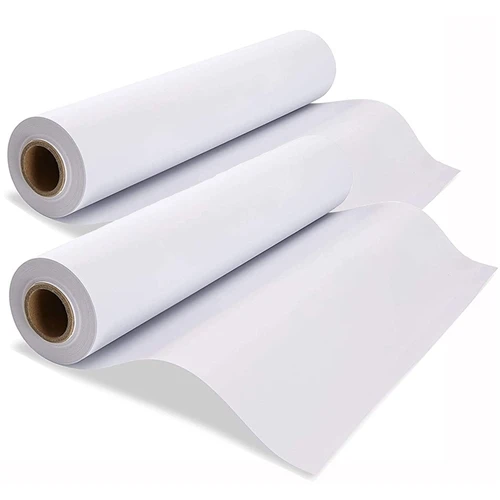
In the ever - evolving world of textile printing, sublimation printing has emerged as a popular choice due to its ability to produce vibrant, long - lasting prints. One key component in sublimation printing is the sublimation paper, and among the various options available, 120gsm Fast Dry Sublimation Paper has caught the attention of many printers. As a supplier of 120gsm Fast Dry Sublimation Paper, I often get asked whether this paper is suitable for printing on blended fabrics. In this blog, I'll delve into the details to provide you with a comprehensive answer.
Understanding Sublimation Printing
Before we discuss the suitability of 120gsm Fast Dry Sublimation Paper for blended fabrics, let's briefly understand the sublimation printing process. Sublimation printing involves the use of heat and pressure to transfer dye from a sublimation paper onto a fabric. The dye, in a solid state on the paper, turns into a gas when heated, and then permeates the fabric fibers. Once cooled, the dye solidifies within the fibers, creating a permanent and high - quality print.


Characteristics of 120gsm Fast Dry Sublimation Paper
The 120gsm Fast Dry Sublimation Paper has several features that make it an attractive option for many printers. The "120gsm" refers to the grammage or the weight of the paper per square meter. A higher grammage generally means a thicker and more robust paper. This thickness can be beneficial as it can hold more dye, resulting in more vibrant and detailed prints.
The "Fast Dry" feature is also crucial. In sublimation printing, it's essential for the ink to dry quickly on the paper. If the ink takes too long to dry, it can smear, leading to poor - quality prints. The fast - drying property of this paper ensures that the ink sets rapidly, allowing for efficient and high - quality printing.
Blended Fabrics: A Complex Canvas
Blended fabrics are made by combining two or more different types of fibers. Common blends include polyester - cotton, polyester - rayon, and nylon - spandex. Each fiber in the blend has its own properties, which can affect the sublimation printing process.
Polyester is the most compatible fiber for sublimation printing because it has a high affinity for sublimation dyes. When polyester is part of a blend, it can still accept the dye well during the sublimation process. However, other fibers like cotton, rayon, or spandex have different characteristics. Cotton, for example, is a natural fiber that doesn't have the same ability to absorb sublimation dyes as polyester.
Suitability of 120gsm Fast Dry Sublimation Paper for Blended Fabrics
Polyester - Dominant Blends
In blends where polyester is the dominant fiber (e.g., 80% polyester and 20% cotton), the 120gsm Fast Dry Sublimation Paper can work very well. The polyester fibers in the fabric will readily absorb the sublimation dye transferred from the paper. The thick paper can hold a sufficient amount of dye, and the fast - drying feature ensures that the dye is transferred cleanly. The result is a print that is vibrant and long - lasting on the polyester portion of the blend.
However, the non - polyester fibers in the blend may not show the same level of color saturation. In the case of a polyester - cotton blend, the cotton fibers may only pick up a small amount of dye, resulting in a muted color on the cotton areas compared to the polyester areas. But overall, if the aesthetic of having some contrast between the fibers is acceptable, the 120gsm Fast Dry Sublimation Paper can still produce a satisfactory print.
Blends with Lower Polyester Content
When the polyester content in the blend is lower (e.g., 30% polyester and 70% cotton), the situation becomes more challenging. The limited amount of polyester means that there are fewer fibers available to absorb the sublimation dye. As a result, the overall color vibrancy and coverage of the print may be significantly reduced. The 120gsm Fast Dry Sublimation Paper can still transfer some dye to the polyester fibers, but the non - polyester fibers will remain mostly uncolored.
In such cases, it may be necessary to pre - treat the fabric or use a different printing method in combination with sublimation to achieve a more uniform and satisfactory print.
Comparing with Other Grammages
We also offer 100gsm Fast Dry Sublimation Paper, 80gsm Fast Dry Sublimation Paper, and 55gsm Fast Dry Sublimation Paper. Each of these papers has its own advantages and is suitable for different applications.
The 100gsm paper is slightly thinner than the 120gsm paper. It can still hold a decent amount of dye, but it may not be as effective in producing extremely vibrant prints on blended fabrics as the 120gsm paper. The 80gsm and 55gsm papers are even thinner. They are more suitable for applications where cost - efficiency is a major concern or when printing on fabrics with a high polyester content that don't require a large amount of dye.
Tips for Printing on Blended Fabrics with 120gsm Fast Dry Sublimation Paper
- Test Prints: Always do test prints on a small piece of the blended fabric before starting a large - scale printing project. This will allow you to adjust the printing settings and assess the quality of the print.
- Pre - Treatment: Consider pre - treating the blended fabric to improve the dye absorption of non - polyester fibers. There are various pre - treatment solutions available in the market that can enhance the fabric's receptivity to sublimation dyes.
- Printing Settings: Adjust the heat, pressure, and time settings on your sublimation printer according to the fabric blend. Different blends may require different settings to achieve the best results.
Conclusion
In conclusion, the 120gsm Fast Dry Sublimation Paper can be suitable for printing on blended fabrics, especially those with a high polyester content. Its ability to hold a significant amount of dye and its fast - drying feature make it a good choice for producing vibrant and detailed prints on the polyester portion of the blend. However, when dealing with blends with lower polyester content, additional steps may be required to achieve a satisfactory print.
If you're interested in exploring the potential of 120gsm Fast Dry Sublimation Paper for your textile printing projects on blended fabrics, I encourage you to get in touch. We can provide you with samples and offer expert advice to help you make the most of this high - quality sublimation paper. Contact us to start a discussion about your specific printing needs and how our products can meet them.
References
- Smith, J. (2020). Sublimation Printing: A Comprehensive Guide. Textile Printing Press.
- Brown, A. (2021). The Science of Dye Transfer in Sublimation Printing. Journal of Textile Science.
- Green, C. (2019). Blended Fabrics and Their Printing Challenges. Textile Technology Review.